


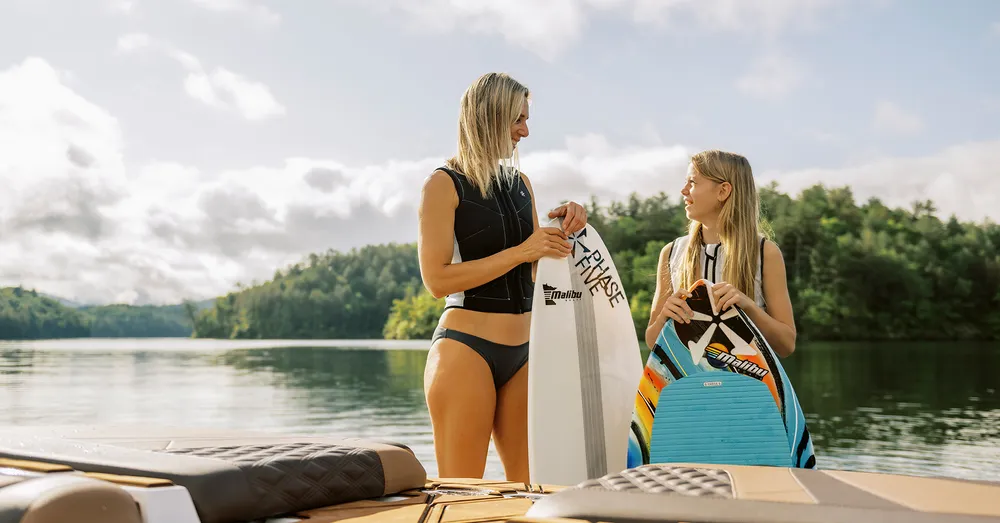
Introducing a beginner to tow-sports requires a deliberate assessment of rider mechanics, velocity profiles, and hull engineering. Across Southeast Texas waterways—whether navigating the high-density weekend loops of Lake Conroe or plotting open-water matrices—the physical forces and structural setups needed to transition an athlete out of deep water differ fundamentally between wakeboarding and wakesurfing.
Managing a heavy ballast payload while preserving passenger safety requires strict adherence to mechanical disciplines. By analyzing the exact hydrodynamics, impact zones, and vital life-safety parameters of each sport, the helm can deliver a structured, progressive entry session that builds rider confidence from the first pull.
The Technical Profile of Wakeboarding
Wakeboarding is an execution of mechanical tension and aerodynamic release, operating at higher velocities and longer tow lines.
- Hydrodynamic Principles: The rider is physically locked into fixed, high-ankle boot bindings, tracking along a non-stretch Spectra or Dyneema line connected directly to the structural tower. Acceleration and lift depend entirely on the athlete's edge control against the wake.
- Velocity Calibration: The helm must maintain a precise tracking speed—holding a tight window between 19 and 22 MPH for intermediate sets, though beginners can be stabilized between 15 and 18 MPH depending on total body mass and hull displacement.
- Impact Risk Factors: Because wakeboarding operates at higher towing velocities, falls introduce greater kinetic energy. A beginner catching a forward edge can experience rapid rotation and high-impact contact with the water column, demanding strict passenger alertness and precise throttle management from the binnacle.
The Technical Profile of Wakesurfing
Wakesurfing relies on extreme displacement and close-quarters hydromechanics, focusing on the pocket energy of a single side wave.
- Hydrodynamic Principles: The rider utilizes a loose, binding-free traction deck, starting with a short, highly knotted rope to navigate into the wave’s sweet spot before tossing the line completely to ride the hydro-propulsion energy rope-free.
- Velocity Calibration: Wakesurfing operates at a highly conservative speed profile, holding a tight window between 10 and 11.5 MPH.
- Wave Generation Requirements: Generating a surfable wave requires immense ballast payloads to drop the stern deep into the water, relying on integrated wake-shaping plates to delay flow convergence on one side. This close proximity to the transom elevates the absolute rule of hull design.
CRITICAL LIFE-SAFETY DIRECTIVE
NEVER under any circumstances attempt to wakesurf behind a traditional sterndrive (I/O) or outboard configuration. The exposed spinning propeller presents a fatal hazard to close-quarters riders. Wakesurfing is strictly restricted to inboard V-drive architectures—such as Malibu’s direct-drive engineering—or forward-facing propulsion layouts where the running gear is positioned safely beneath the hull structure.
Crew and Gear Staging Framework
The outcome of your initial tow session is dictated by the quality and fit of the hardware you deploy before the engine ignites.
- Buoyancy Fitment Standards: Every participant must don a Coast Guard-approved Type III sport vest. The PFD must be cinched tightly to prevent it from riding up past the chin upon impact with the water, ensuring the rider's mouth sits completely clear of the waterline during deep-water starts.
- Board Dimensions vs. Rider Mass: Utilizing a board with inadequate surface area or volume will stall a beginner during the hole shot. Ensure the board’s rated buoyancy matches or exceeds the rider’s weight matrix to allow the hull to plane effortlessly without forcing the engine into cavitation loops.
- Rigging Cleanliness: Never permit loose tow lines to snake across the passenger deck. Keep ropes coiled tightly inside dedicated sub-floor lockers until the hull is completely stationary outside the active navigation channels.
Regional Waterway Planning and Environmental Factors
The physical condition of the water column directly impacts a beginner's ability to complete a clean deep-water start.
- The Smooth Water Premium: Attempting to train a new rider through choppy, high-density weekend boat traffic creates unnecessary physical fatigue. Plan your progression sessions around quiet, low-traffic weekday mornings or sheltered, windward shorelines where the water is calm.
- Maintain Linear Throttle Management: Avoid slamming the binnacle forward from a dead stop. Apply smooth, linear acceleration to pop the rider out of the hole shot without straining their arms or inducing excessive thermal spikes across your engine’s cooling galleries.
Technical Frequently Asked Questions
Which discipline is structurally more accessible for a first-time rider?
Wakesurfing is generally considered more accessible for beginners due to the lower towing velocity (10–11 MPH) and the absence of fixed bindings. This lower speed reduces the physical impact of falls and allows for continuous verbal communication between the aft observer and the surfer.
Can a standard runabout generate a safe wakesurfing wave?
No. Generating a predictable, consistent surfing wave requires a specialized tournament platform equipped with automated internal ballast manifolds and digital wake-shaping plates. More importantly, attempting to surf behind a traditional outboard or sterndrive watercraft places the rider dangerously close to an exposed propeller, which is a critical safety violation.
Sourcing Authorized Marine Performance Upgrades
Optimizing a high-performance tow-sports boat requires outfitting the platform with components and controls calibrated to exact structural tolerances.
- Certified Mechanical and Systems Support: From calibrating automated ballast pump loops to tracing electrical shorts, flushing synthetic oils, and tuning wake plates, trust our factory-trained technicians at the SMG Boats Service Center department to keep your vessel pristine. To submit a specialized maintenance request directly, access our online Service Form.
- Genuine OEM Component Sourcing: For mariners performing routine maintenance or outfitting their rigging, our dedicated Parts Center counter stocks genuine factory filters, water pump impellers, heavy-duty marine batteries, and sacrificial zinc anodes.
- Propulsion System Modernization: For owners looking to replace an aging power plant or add advanced digital speed controls for absolute throttle precision, check our specialized Yamaha Outboards center to restore your mechanical advantage.
Fleet Allocation and Financial Coordination
What structural credit frameworks exist for outfitting a boat with advanced electronics?
Our specialized Financing office provides tailored loan configurations, allowing you to seamlessly bundle your choice of high-performance modern hull, reliable outboards, technical electronics, and comprehensive Marine Insurance packages into a single structured framework. You can calculate precise capital trajectories using our digital Payment Calculator.
Can I leverage my current dayboat's equity to fund a platform transition?
Yes. We coordinate transparent, market-accurate asset evaluations through our internal Sell Your Boat division, making it highly efficient to liquidate your old hull and apply that value directly toward our premium inventory of New Boats or thoroughly inspected Used Boats.
How do I track upcoming dealer events or connect with SMG Boats?
To monitor safe-boating seminars, captain safety workshops, and regional consumer rendezvous across our South Texas hubs, check our active Events calendar. To review long-term mechanical protection parameters, consult our Extended Service Contracts checklist. For maps and showroom hours across all our regional dealer hubs, visit our primary Contact Us portal or locate our facilities directly via our Locations directory.