


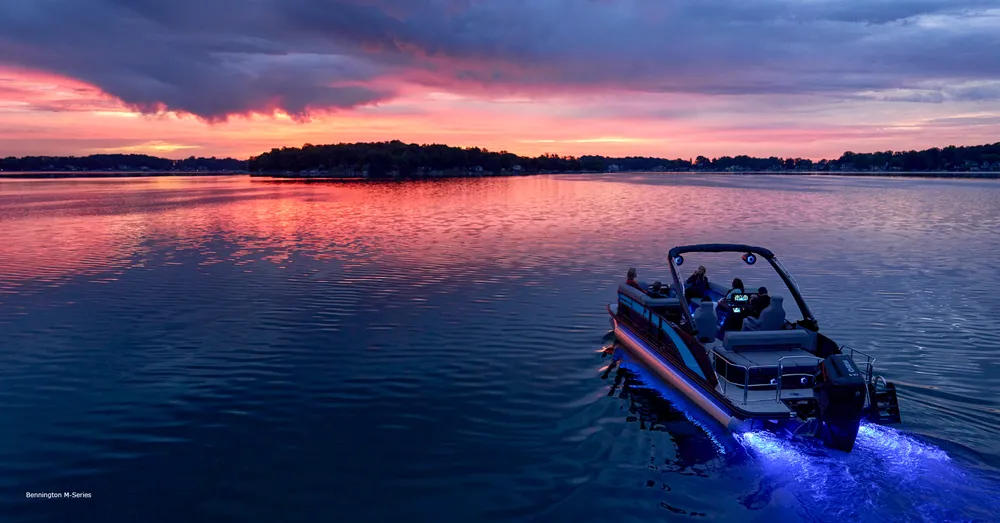
Navigating a high-density, multi-use reservoir requires trading guesswork for strict situational awareness and predictable transit lines. Across Southeast Texas—whether positioning an elite Malibu Wakesetter for a tow run or piloting a luxury Regal fiberglass bowrider near heavy marina corridors—maintaining an orderly, consistent piloting profile is your primary defense against close-quarters liabilities. When hundreds of watercraft share the water column simultaneously, understanding statutory speed limits and right-of-way hierarchies prevents expensive hull impacts and ensures total safety.
By treating waterway navigation as a deliberate, rule-based pilotage drill, novice operators can easily surpass the safety records of undisciplined boaters who rely on improvisation.
1. Decoding Lake Conroe Regulatory Markers and Shallows
Marine channel markers are not optional visual guides; they are critical informational devices placed to prevent catastrophic grounding events and structural lower-unit destruction.
- The Lateral Buoy Framework: Strictly observe localized channel markers when transitioning through narrow cuts or navigating the northern, more hazardous timber zones of the reservoir. Maintain a centralized track within designated navigation lanes, and never pass between a shallow-water warning buoy and the adjacent shoreline.
- Reject Blind Trailing Habits: Never trail a preceding vessel blindly into an unfamiliar cove or shallow sector under the assumption that their path is clear. A shallow-draft pontoon or a personal watercraft can skim over submerged sandbars and timber hazards that will instantly shear the running gear, rudder, or propeller off a deep-Vee fiberglass hull or a heavily ballasted tournament boat.
- Establish Electronic Charts early: Utilize a dedicated marine GPS chartplotter interface or a localized mobile navigation app to actively monitor real-time bottom contours. If you enter an unfamiliar quadrant or note a drop in visual depth displays, immediately throttle down to headway speed to prevent impact with hidden hazards.
2. The Hydrodynamics of Statutory No-Wake Speeds
Operating a vessel within a restricted zone requires a precise understanding of wave translation. Many operators incorrectly assume that as long as their hull is not fully on plane, they are compliant with local laws.
- The 50-Foot Statutory Radius: Texas boating regulations mandate that all motorboats must drop to immediate headway speed (the lowest possible velocity required to maintain safe steering control without generating a swell) when within 50 feet of another vessel, dock, pier, public boat ramp, swimmer, or shoreline.
- The Displacement Surge Trap: Operating a heavy vessel at a semi-displacement speed (bow high, stern squatting deep in the water column) generates a highly destructive wave. This deep-running surge slams moored vessels, strains dock lines, and compromises passenger stability on adjacent swim platforms. Idle down completely well before crossing the threshold of a posted marina basin or residential channel entrance.
3. Right-of-Way Baselines and Transit Predictability
When two vessels approach each other on intersecting paths, safety relies entirely on adhering to international and state piloting hierarchies rather than waiting to see who blinks first.
- The Overtaking Protocol: If you are approaching another vessel from astern to pass, you are the burdened watercraft. You must communicate your intentions early, signal your lane clearly, and execute a decisive passing maneuver at a safe distance. Never linger parallel to the other boat within their blind spot. The vessel being overtaken must maintain a predictable, linear heading matrix and a stable velocity profile.
- The Crossing Equation: When two motorboats are on a collision course at right angles, the vessel that has the other on its starboard side must yield. This means if a boat is approaching your starboard beam, you must throttle down, alter course to the right, or pass astern of their transom.
- Tow-Sports Clearance Boundaries: Never cut between a dedicated wakeboard or wakesurf platform and the athlete tracking behind them. Maintaining a wide safety buffer from active tow lines prevents high-speed rope entanglement and ensures that if the rider falls into the water column, you have ample stopping clearance.
4. Professional Marina and Shoreline Courtesy
Maintaining high behavioral standards in crowded public spaces preserves the collective safety of the waterfront.
- Acoustic Profiling: Turn down your multi-zone marine audio amplifiers and tower speakers completely when entering tight marina slips, fuel docks, or residential canals. Keeping audio levels low ensures the captain can hear verbal instructions from dock hands and acoustic warning signals from surrounding boats. San Jacinto River Authority (SJRA) regulations strictly enforce a noise limit of 86 decibels within 100 feet of land-shore facilities.
- Roller Mitigation Near Vulnerable Craft: High-displacement luxury wakes can easily capsize or swamp low-freeboard vessels. When navigating past stationary fishing platforms, non-motorized paddlecraft, or kayaks, alter your heading early to minimize the impact of your displacement rollers against their hulls.
Technical Frequently Asked Questions
What is the maximum legal speed allowed when operating a watercraft after dark?
While the open waters of the reservoir do not feature a posted speed limit during daylight hours, Texas maritime law mandates a strict 25 MPH speed limit at night (defined from 30 minutes after sunset to 30 minutes before sunrise). This rule is vital because structural vessel lighting easily blends into ambient shoreline residential lights after dark, making it exceptionally difficult to judge tracking velocities and closing distances.
How can a new operator accelerate their physical close-quarters handling proficiency?
The most efficient diagnostic strategy is conducting live, hands-on docking and maneuvering drills under real-world conditions. Booking structured on-water demonstrations allows you to calibrate your helm inputs, analyze wind-drift vectors, and practice pulse-throttle techniques before committing to high-pressure holiday weekend itineraries.
Sourcing Factory-Authorized Assets & Technical Care
Mastering advanced navigation requires keeping your hull’s propulsion and steering mechanisms tuned to absolute factory specifications.
- Certified On-Water Demonstrations and Selection: To experience advanced close-quarters handling profiles or evaluate the tracking differences between specialized V-drive tournament boats and deep-Vee fiberglass hulls, book a live trial via the SMG Boats Contact Us portal or explore our main digital hub at SMG Boats.
- Multi-Point Mechanical Systems Support: If your steering helm exhibits erratic resistance, your digital switching helm requires a software synchronization, or your throttle linkages show physical play, rely on our factory-trained technicians at the SMG Boats Service Center department. To submit a specialized maintenance request directly, utilize our online Service Form.
- Genuine OEM Components and Rigging: For operators replacing safety equipment, sourcing navigation components, or procuring high-tensile rigging lines, our dedicated Parts Center marketplace stocks factory-direct filtration elements, replacement zinc anodes, heavy-walled cylindrical fenders, and Coast Guard-approved safety hardware.
Fleet Allocation and Financial Coordination
What structural credit frameworks exist for outfitting a boat with advanced electronics?
Our internal Financing office structures customized credit portfolios, allowing buyers to seamlessly bundle their hull choice, high-performance Yamaha Outboards, technical navigation electronics, and comprehensive Marine Insurance packages into a single structured loan. You can calculate precise capital trajectories using our digital Payment Calculator.
Can I leverage my current boat's equity to fund an upgrade this season?
Yes. We coordinate transparent, market-accurate asset evaluations to eliminate personal listing delays. To liquidate your old hull and apply its equity directly toward a premium upgrade, submit your vessel's technical specifications to our Sell Your Boat department. Explore our extensive showrooms of premium New Boats and thoroughly inspected Used Boats.
How do I track upcoming dealer events or locate an SMG Boats facility?
To monitor safe-boating seminars, captain safety workshops, and regional consumer rendezvous across our South Texas hubs, check our active Events calendar. To review long-term structural or mechanical asset protections, consult our Extended Service Contracts directory. For maps, showroom directions, and operational hours across all our regional dealer hubs, locate our facilities directly via our Locations directory.