


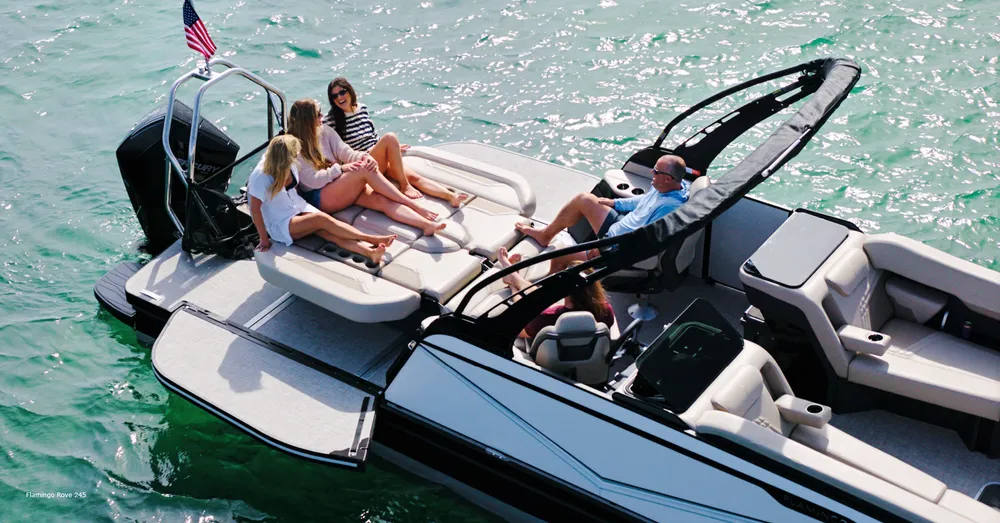
Selecting the correct pontoon or tritoon architecture requires shifting focus from basic deck square footage to strict spatial engineering and crew weight distribution. Across Southeast Texas waterways—especially when navigating the broad, high-traffic stretches of Lake Conroe—the physical layout you choose directly dictates your hull’s tracking stability and passenger safety. Choosing a platform based solely on static showroom aesthetics introduces immediate operational friction once the deck layout is crowded with packed gear totes, massive rotomolded coolers, and a full passenger manifest moving through active channels.
By analyzing the specific physics of onboard movement, full-coverage thermal protection, and low-profile integrated storage, captains can establish an organized, high-utility cruise platform.
1. Structural Layout Matrix and Crew Distribution
A pontoon deck layout behaves as a dynamic payload field when the vessel is underway. If your passengers cluster unevenly or obstruct core lines of sight, your hull’s running attitude will lean, increasing fuel consumption and compromising close-quarters tracking.
- The Quad-Bench and Cruise Configuration: Exemplified by premium lines like the Bennington S-Series or Evotti QL layouts, dual forward and aft parallel lounges optimize weight distribution along the centerline. This layout establishes a balanced, living-room configuration that handles rolling displacement chop smoothly, making it ideal for social cruising and large-scale cove gatherings.
- The Quad-Lounge Entertainment and Sandbar Profile: Layouts featuring conversational configurations, convertible tables, and expandable serving areas—such as the innovative Flamingo ROVE series or Premier Pontoons—prioritize maximum deck flow and social transitions. These setups maximize usable surface area when stationary at a sandbar but require passengers to remain safely within the interior gate perimeters while the lower units are delivering torque.
- The Rear-Facing Split-Bench and Tow-Sports Hybrid: If your itinerary routinely includes towing athletes on tubes or wakeboards, configurations like Bennington’s Swingback (SB) or Evotti’s Center Stern (CS) lines are mandatory. These layouts place heavily padded, rear-facing daybeds at the transom, providing the dedicated observer with uncompromised lines of sight to the tow line while keeping the active helm station free of passenger cross-talk.
2. Full-Coverage Thermal Mitigation and Canopy Engineering
In Southeast Texas, where summer heat index values regularly exceed 100°F, shade cannot be treated as an optional luxury accessory. It functions as a critical safety barrier against UV radiation and thermal exhaustion.
- Illuminated Power Bimini Top Ranges: High-end pontoon segments frequently feature push-button automated power bimini systems as a standard baseline. Ensure your canvas footprint spans a minimum of 10 to 12 feet of continuous deck coverage, shielding both the captain’s console and the mid-ship passenger lounges during intense midday sun cycles.
- Structural Velocity Ratings: Verify that your bimini support stanchions and hardware are mechanically rated to withstand continuous cruising speeds up to 30 MPH. Lower-tier, loose canopy frames will flex, rattle, or fatigue structurally when exposed to high headwinds along the open reservoir.
3. Integrated Low-Profile Hull Storage Logistics
Allowing loose safety gear, damp towels, and personal items to clutter your deck pathways introduces immediate trip hazards and degrades premium marine fabrics.
- Sub-Seat Volume Management: Prioritize pontoon lines that utilize rotomolded under-seat storage tubs equipped with integrated drainage channels. This construction ensures that if moisture enters the compartment from wet life jackets, the fluid routes immediately out to the deck drainage system rather than pooling against your cargo.
- In-Floor Center-Tube Lockers: Utilizing a true tritoon configuration unlocks massive sub-deck storage volumes inside the center aluminum log. This deep, low-profile locker is the ideal structural repository for heavy, high-volume assets like wakeboards, extended tow lines, anchor assemblies, and secondary mooring lines, keeping centers of gravity low.
- Dedicated Cold-Chain Enclosures: Look for helm layouts that feature dedicated recess cutouts for large rotomolded coolers. Stowing your cold storage flush inside a designated console boundary prevents the cooler from sliding across the vinyl flooring during high-speed banking maneuvers or sharp turns.
Technical Frequently Asked Questions
What distinct performance boundaries separate a traditional twin-tube pontoon from a modern tri-toon configuration?
A standard twin-tube pontoon relies on displacement buoyancy, making it highly efficient for low-RPM flat-water idling but prone to plunging its nose into sharp waves and leaning outward during high-speed turns. A true tri-toon—such as Evotti’s proprietary EVO3 hull or Bennington’s ESP performance package—integrates a specialized third center log equipped with lifting strakes. This architecture enables the hull to plane efficiently, roll inward naturally during turns, and slice cleanly through heavy weekend hull traffic with larger engine payloads.
How does overall length directly influence close-quarters handling and trailing logistics?
While a 25-to-30-foot luxury platform provides exceptional payload capacity, its expanded sail area makes it highly susceptible to high-wind crosswinds during slow-speed maneuvers. For captains navigating narrow covered slips or launching at crowded municipal ramps, a highly agile 21-to-23-foot platform often minimizes operational stress while providing ample space for intermediate crews.
Sourcing Authorized Factory Inventories & Mechanical Care
Selecting or modifying your luxury pontoon layout requires matching your requirements with factory-certified marine specialists.
- Pristine Showrooms and Live Product Demonstrations: To inspect cutting-edge deck layouts, compare tritoon performance packages, or evaluate top-tier factory selections, browse our complete inventories of New Boats and premium pre-owned options at SMG Boats.
- Certified Mechanical and Systems Support: From rigging specialized engine monitors to checking automated ballast loops or executing certified warranty oil changes, rely on our factory-trained technicians at the SMG Boats Service Center department. To submit a specialized maintenance request directly, utilize our online Service Form.
- Genuine OEM Components and Parts Center: For operators updating structural trailer straps, sourcing high-durability mooring lines, or purchasing custom-molded replacement fenders, our dedicated Parts Center supplies factory-direct accessories built to handle heavy cyclic stress.
Fleet Allocation and Financial Coordination
What structural credit frameworks exist for financing a premium pontoon purchase?
Our internal Financing office structures customized credit portfolios, allowing buyers to seamlessly bundle their hull choice, high-performance outboard, technical electronics, and localized premium Marine Insurance asset protections into a single structured loan. You can calculate precise capital trajectories using our digital Payment Calculator.
Can I leverage my current watercraft's equity to fund an upgrade this season?
Yes. We coordinate transparent, market-accurate asset evaluations to eliminate personal listing delays. To liquidate your old hull and apply its equity directly toward a modern upgrade, submit your vessel's technical specifications to our Sell Your Boat department. Explore our extensive showrooms of premium New Boats and thoroughly inspected Used Boats.
How do I track upcoming dealer events or connect with SMG Boats?
To monitor safe-boating seminars, captain safety workshops, and regional consumer rendezvous across our South Texas hubs, check our active Events calendar. To review long-term structural or mechanical asset protections, consult our Extended Service Contracts directory. For maps, showroom directions, and operational hours across all our regional dealer hubs, visit our primary Contact Us portal or locate our facilities directly via our Locations directory.