


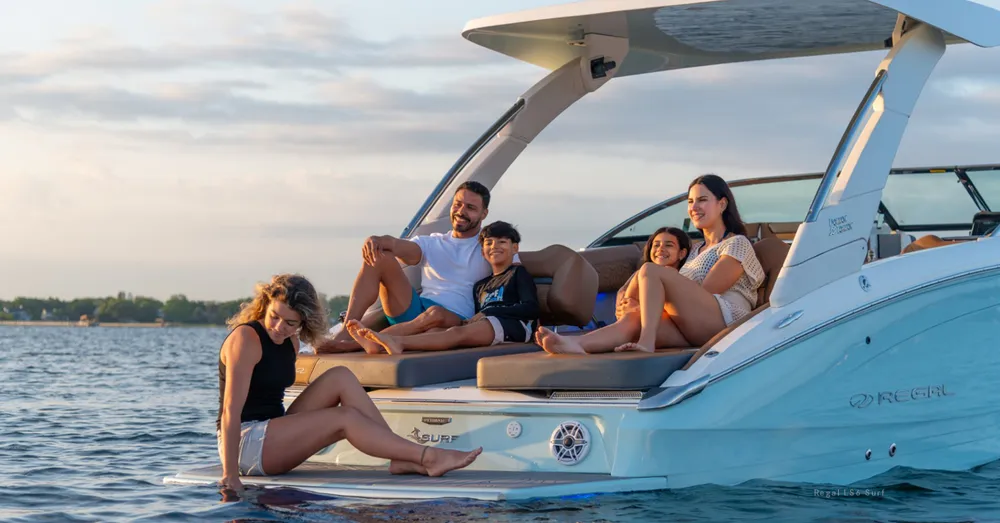
Pushing the throttle of your boat forward and watching the coastline break away is the ultimate reward for any South Texas mariner. Whether you are running out of our showroom hubs in Conroe to cruise the wide-open expanses of Lake Conroe or setting a relaxed course along the Gulf Coast near Houston, selecting a premium family boat requires looking past simple seat counts and generic feature sheets. On a high-density reservoir like Lake Conroe, intense afternoon boat traffic combines with shifting wind gradients to create a challenging environment on the water column. If your vessel’s layout, sun protection, and slow-speed tracking mechanics are mismatched to the region, a relaxing afternoon with the family can quickly transform into an exhausting chore.
Evaluating five specific, high-utility features before signing a purchase agreement ensures you secure a platform that simplifies single-handed operations and integrates seamlessly into your weekly boating routine.
1. Dynamic Seating Flow and Clear Centerline Walkways
Evaluating a passenger deck while the boat is stationary in a quiet showroom can be highly deceptive. A layout that feels wide open when empty can quickly become heavily congested once it is outfitted with packed gear totes, large rotomolded coolers, and a full crew.
- Analyze On-Plane Behavior: Identify exactly where your guests will sit while traveling at a comfortable 25 MPH cruising speed. If the seating layout forces passengers to crowd right near the helm console or repeatedly blocks the captain’s starboard line of sight, it introduces an immediate handling liability.
- Isolate Clear Transit Walkways: Prioritize configurations—such as the balanced parallel lounges found on Bennington or Evotti pontoons, or the deep, wrapped cockpits of a Regal bowrider—that maintain a continuous, unobstructed walkway from the bow to the stern walk-through. Passengers must be able to move throughout the boat without stepping over structural seating surfaces or loose coolers.
2. High-Efficiency Thermal Protection Footprints
In South Texas, where summer heat index values regularly exceed 100°F, shade cannot be treated as an optional aesthetic luxury. It serves as a vital physiological barrier against intense UV radiation and heat exhaustion.
- Target the Stationary Hangout Zone: A small canopy that only covers the forward bow section provides minimal utility when the boat is idling or anchored. Prioritize automated power bimini systems or extended canvas configurations that cast a continuous shade footprint directly over the primary mid-ship lounges and the helmsman’s command chair.
- Verify Wind and Velocity Ratings: Ensure the canopy frame, support stanchions, and quick-release hardware are mechanically rated to withstand sustained headwinds up to 30 MPH. Lower-tier, loose canopy frames will rattle, flex, or experience structural fatigue when running through open-water reservoir chop.
3. Accessible, Low-Profile Storage Zoning
Allowing safety gear, damp towels, and watersports tow lines to clutter deck pathways introduces immediate trip hazards and accelerates wear on premium marine vinyl upholstery.
- Sub-Seat Compression Hinges: Look for under-seat storage compartments engineered with articulated tension hinges. This design allows you to open lockers and access sub-deck gear tubs easily without requiring passengers to completely vacate the lounge cushions.
- Isolate Wet and Dry Staging Areas: Ensure the hull features a dedicated, self-draining ski locker or an integrated aft storage well to isolate saturated ropes, life jackets, and tow tubes. Stowing damp equipment in unventilated dry lockers creates high-humidity microclimates that foster rapid mold growth.
- Secure Helm Glove Boxes: The captain’s station should feature a weather-tight, gasket-sealed glove box or a dedicated dash recess equipped with internal USB charging ports to safely stash phones, wallets, vehicle keys, and vessel registration documents away from solar heat and splashing water.
4. Low-Impact Re-Entry and Transom Geometries
A successful lake day routinely includes swimming, wakesurfing, or cove anchoring, making an easy transition from the water back onto the deck layout a primary ergonomic requirement.
- Deep-Submersion Ladders: Standard, short marine ladders force swimmers to execute high-strain vertical climbs close to the running gear. Prioritize telescoping four-step ladders that extend deep below the water line, allowing children and adults to find immediate foot placement effortlessly.
- Traction-Mat Swim Platforms: Ensure the aft swim platform features a high-density, non-skid marine traction pad (such as SeaDek). This material minimizes slip hazards, remains cool under direct sunlight, and protects fiberglass gelcoats from impact scratches caused by wakeboards or tow hooks.
5. Predictable Low-Velocity Handling Dynamics
The ultimate test of a family boat is how predictably the hull handles close-quarters maneuvering near concrete bulkheads, packed transient fuel docks, and narrow slips under a heavy crosswind.
- Decelerate via Neutral Coasting: During an on-water demonstration, analyze how the vessel responds to short, brief pulses of power. The throttle binnacle should slip cleanly into forward and reverse detents without mechanical play or shift lag, allowing you to use the boat’s natural hydrodynamic drag to execute smooth docking maneuvers.
- Trace Steering Resistance: Articulate the steering wheel completely from lock-to-lock at headway speed. Tracking lines must remain smooth and linear; any sticky feedback, notchiness, or delayed rudder responsiveness indicates an underlying hydraulic deficiency that will make high-wind docking stressful.
Frequently Asked Questions
What is the legal speed restriction for operating a watercraft after dark in Florida waters? Unlike jurisdictions with blanket numeric nighttime speed caps, Florida maritime law mandates that all vessels maintain a "safe speed" at night based on prevailing visibility, weather, and traffic conditions. However, operators must strictly adhere to localized, posted "Slow Speed, Minimum Wake" restrictions, which legally require the hull to ride fully off plane and completely settled in the water column with a minimal wake profile.
Why is running the engine bilge blower mandatory before launching or starting an inboard vessel? Gasoline fuel vapors are heavier than atmospheric air and naturally accumulate in the lowest quadrants of a sealed engine bay or bilge compartment. Safety regulations dictate that power-operated exhaust blowers must be activated for a minimum of four continuous minutes prior to starting an inboard or sterndrive engine. This process evacuates any trapped combustible vapors, preventing a catastrophic static-spark explosion inside the hull machinery space.
Which primary vessel segment represents the most versatile baseline for an active Texas family? The choice depends entirely on your primary on-water itinerary. For families focused on elite tow-sports progression, a specialized V-drive inboard tournament boat—such as a Malibu Wakesetter or Axis platform—utilizes integrated ballast manifolds and wake plates to create clean wave profiles safely. For families prioritizing social entertaining, luxury day cruising, and rough-water tracking, a deep-Vee Regal fiberglass bowrider or a high-performance tri-toon delivers exceptional stability and comfort.
Why does single-handed operational competence define long-term ownership satisfaction? If a vessel requires a full, experienced crew just to manage lines, tend the trailer winches, and execute basic docking approaches, the captain will naturally begin to avoid busy weekends. A properly engineered family boat allows a single adult to handle all tracking, launching, and docking tasks smoothly, transforming the watercraft into a highly accessible, weekly recreational option.
Sourcing Factory-Authorized Assets & Technical Care
Aligning your family’s lifestyle with the correct hull geometry and propulsion setup requires leveraging professional marine assets and factory-trained technical support.
- Pristine Showrooms and Comprehensive Inventories: To audit seating configurations, compare luxury trim lines, or evaluate performance packages firsthand, explore our complete lineups of New Boats and premium options at our main digital hub: SMG Boats.
- Schedule Live Technical Demonstrations: To calibrate your handling expectations, test slow-speed reverse behaviors, or experience tracking characteristics under real-world loads before purchasing, book an on-water trial via our primary Contact Us portal.
- Certified Multi-Point Mechanical Support: If your existing platform requires an extensive multi-point safety sweep, an annual fluid flush, or an emergency electrical diagnostic audit, trust our factory-certified technicians at the SMG Boats Service Center division.
- Genuine OEM Component Sourcing: For mariners outfitting safety inventories, replacing sacrificial zinc anodes, or purchasing double-braided nylon dock lines and heavy-walled cylindrical fenders, our dedicated Parts Center counter supplies factory-direct accessories.
Fleet Allocation and Financial Coordination
What credit frameworks exist for structuring a premium boat purchase? Our internal Financing office structures customized consumer portfolios, allowing buyers to seamlessly bundle their choice of high-performance modern hull, reliable engine, technical electronics, and comprehensive Marine Insurance protections into a single plan. You can calculate precise capital trajectories using our digital Payment Calculator.
Can I leverage my current watercraft's equity to fund a platform transition? Yes. We coordinate transparent, market-accurate asset evaluations to eliminate personal listing delays. To liquidate your old hull and apply its equity directly toward an upgrade, submit your vessel's technical specifications to our Sell Your Boat department. Explore our extensive showrooms of premium New Boats and thoroughly inspected Used Boats.
How do I track upcoming dealer events or locate an SMG Boats facility? To monitor safe-boating seminars, captain safety workshops, and regional consumer rendezvous across our South Texas hubs, check our active Events index. To review long-term structural or mechanical asset protections, consult our Extended Service Contracts directory. For direct lines, showroom maps, and operational hours across all our regional dealer hubs, locate our facilities directly via our Locations directory.